


Cloud technology is everywhere—from the apps we use daily to the tools companies rely on to grow. But just “moving to the cloud” isn’t enough. Without a clear plan, businesses risk spending more than they should, encountering security problems, or missing out on the benefits that cloud technology can offer. That’s where Cloud Strategy and Implementation come in. At Fix Partner, we help companies—especially those with non-technical leadership—create a clear, actionable cloud roadmap. This ensures cloud decisions support the business, not just the IT team.
Let’s explore why a cloud strategy is essential and what areas it should cover.
Cloud Strategy and Implementation: Why It Matters
When businesses adopt cloud technology, it’s easy to get caught up in the speed and flexibility it offers. But without a clear plan, that speed can lead to mistakes. A strong Cloud Strategy and Implementation plan helps you make informed choices, control costs, and support long-term growth. It’s not just about tools—it’s about building a smarter business.
- Clear Choices, Better Outcomes: Cloud platforms offer a wide range of tools, but that doesn’t mean every tool fits your business. Jumping in without a roadmap can lead to mismatched systems or underused services. A clear strategy helps you cut through the noise. It connects technology decisions to your actual business needs, ensuring every investment drives real value.
- Plan Now, Save Later: Cloud costs can climb quickly, especially if services are left running when no longer needed. The “pay-as-you-go” model is great for flexibility, but risky without controls. With a strategy in place, you can monitor usage, set budgets, and avoid surprises. That means more value from your cloud spend—and fewer headaches later.
- One Team, One Direction: When different teams choose different cloud tools, the result is often disconnection and confusion. That slows down work, increases risk, and makes collaboration harder. A unified strategy brings everyone onto the same page. Shared tools, clear rules, and aligned processes lead to better results and stronger teamwork.
- Grow Without Growing Pains: Your business will evolve, and your cloud systems need to keep up. Whether you’re scaling fast or facing new challenges, the right cloud setup should adjust smoothly. A strong cloud strategy gives you that flexibility without losing control. You’ll be able to adapt confidently, knowing your infrastructure supports your next move.
Key Benefits of a Strong Cloud Strategy
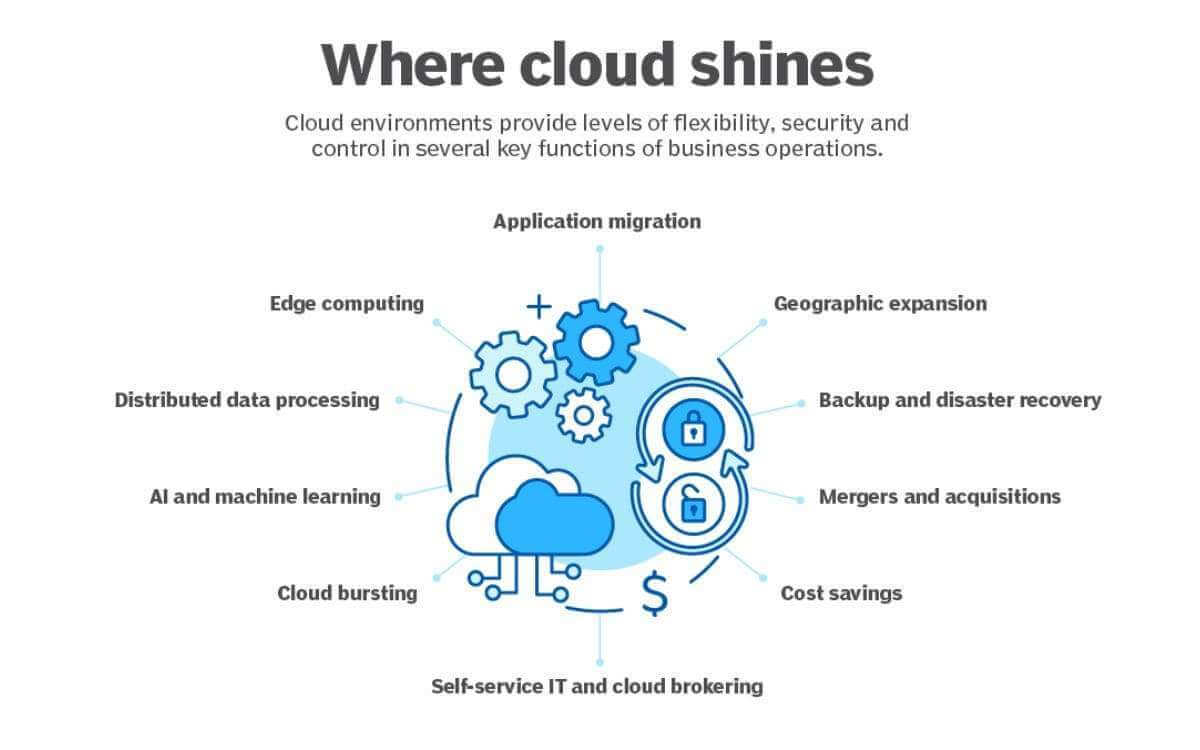
Cloud Strategy and Implementation isn’t just for IT teams. Today, it’s essential for any business looking to grow, stay competitive, and manage change efficiently. The cloud offers exciting tools—but without a strategy, even the best technology can lead to confusion, cost overruns, or security risks.
A cloud strategy provides structure, direction, and alignment across your entire organization. Let’s look at four key reasons why it matters.
1. Aligning Technology with Business Needs
Every company has unique goals, whether it’s improving customer service, reducing costs, or enabling remote work. But without a clear strategy, different teams might choose cloud tools that don’t work well together, or don’t support the company’s long-term vision.
A cloud strategy begins with understanding your specific business goals. Then, it maps those goals to the right cloud services. This ensures your cloud investments directly support outcomes like performance, flexibility, and customer satisfaction.
2. Clear Policies for Governance and Continuity
The cloud brings flexibility, but also complexity. Different departments may use cloud services in different ways, making it harder to control data, stay compliant, or respond to disruptions.
A well-structured cloud strategy outlines rules for:
- Data access and protection
- Disaster recovery and backups
- Meeting industry regulations
- Ongoing monitoring and control
This helps prevent chaos and ensures your business can keep running, even when unexpected challenges arise.
3. Strengthening Security and Data Privacy
Cloud providers protect their infrastructure, but your business is still responsible for how data is handled. Without clear policies, sensitive information can be exposed or misused.
A cloud strategy sets guidelines for:
- User access control
- Data encryption and location
- Incident response
- Loss prevention tools
It also promotes company-wide awareness of security responsibilities, reducing risks and building trust with your customers.
4. Managing Cloud Costs and Optimization
Cloud services often start small but can grow quickly, and so can the bill. It’s easy to lose track of what you’re using and what you’re paying for.
A cloud strategy helps control costs by:
- Identifying the services you need
- Tagging and tracking usage
- Turning off what’s not being used
- Taking advantage of pricing discounts
- Using automation to scale efficiently
These practices make sure you’re not overspending and help your business get full value from your cloud investment.
Common Challenges in Cloud Strategy Planning
Creating a successful Cloud Strategy and Implementation plan is essential, but it’s not without its hurdles. Many organizations, especially those new to the cloud, face practical challenges that can delay progress or limit the long-term value of their investment. Understanding these challenges in advance helps businesses prepare better and avoid costly missteps.
1. Limited Cloud Skills
One of the most pressing issues is the lack of cloud expertise. Cloud environments offer a wide variety of services and tools, and without the right knowledge, teams may struggle to make effective decisions. This gap can lead to underutilized features, increased costs, or inefficient setups. That’s why a strong cloud strategy includes plans for hiring experienced professionals, upskilling current teams, or partnering with a knowledgeable provider to bridge the knowledge gap from the start.
2. Resistance to Organizational Change
Beyond technical skills, companies often underestimate the impact of organizational change. Moving to the cloud isn’t just a tech upgrade—it’s a shift in how the business operates. Processes need to be redefined, roles change, and long-standing habits can be challenged. Without clear communication and active engagement from leadership, resistance to change can stall cloud adoption. Successful strategies prioritize collaboration between departments, align teams around shared goals, and build support from early stages to ensure the transition is embraced.
3. Complex Workload Migration
Another common challenge lies in migrating existing workloads. Not all systems are cloud-ready. Older applications may require major updates or full redesigns, while others may have dependencies that complicate the move. Without careful planning, these workloads can disrupt operations or fail to perform in the new environment. A practical cloud strategy includes workload assessments, proof-of-concept testing, and contingency plans for legacy systems to ensure a smooth transition.
4. Security and Compliance Gaps
Security and compliance are also top concerns. Even organizations with strong internal policies may find it difficult to extend those standards into the cloud, especially when working with third-party providers. Differences in infrastructure, processes, and responsibilities can create gaps in protection. A solid strategy outlines who is responsible for what, evaluates providers’ capabilities, and puts in place strict controls around data access, encryption, monitoring, and incident response to minimize risk.
5. Vendor Lock-In Risks
Vendor lock-in adds another layer of complexity. Many cloud services are proprietary, and switching providers or integrating systems can be difficult once you’ve made your initial investment. Without a strategy focused on interoperability and flexibility, businesses may find themselves tied to a single vendor, limiting their ability to adapt. Forward-thinking cloud strategies emphasize the use of open standards, portability, and multi-cloud planning to avoid dependency and increase resilience.
6. Uncontrolled Cloud Costs
Finally, cost management often proves more difficult than expected. Although cloud platforms promise efficiency, the pay-as-you-go model can quickly become expensive if resources aren’t monitored and optimized. Unused services, untracked usage, and lack of governance can lead to budget overruns. To address this, a cloud strategy should include detailed cost monitoring, regular reviews, automation for scaling and shutdown, and policies that align spending with actual business needs.
Cloud Strategy and Implementation brings transformative opportunities, but only if businesses navigate these challenges with clarity, discipline, and a well-defined plan. By preparing for these obstacles early, organizations can confidently move toward a cloud future that is both secure and scalable.
Real-World Example of a Cloud Strategy
When it comes to Cloud Strategy and Implementation, there’s no one-size-fits-all approach. Every organization has unique goals, systems, and challenges. What matters most is building a strategy that fits your specific business context, not chasing a “perfect” template. A great example of this can be seen in how the National Oceanic and Atmospheric Administration (NOAA) approached its cloud journey.
Why NOAA’s Cloud Strategy Stands Out
NOAA’s Office of Oceanic and Atmospheric Research released a formal cloud strategy that outlined how the agency would use cloud technology to achieve its mission through 2026. Instead of focusing on technical details, NOAA’s strategy focused on the “what” and “why”—the big picture. The document acts as a mission statement rather than a technical manual, which makes it a helpful guide for teams across the organization.
Strategic Goals with Business Focus
NOAA defined several strategic priorities for cloud adoption. These goals were designed to support core business functions like data analysis, machine learning, and high-performance computing (HPC). Here’s how they approached it:
- Cloud Migration Options: NOAA laid out a plan for rehosting, replatforming, and refactoring its existing systems. This flexible approach helped the agency match the right cloud method to the right workload.
- Embracing Cloud-Native Tools: Rather than simply replicating old systems in the cloud, NOAA aimed to build cloud-first capabilities. This allowed the agency to improve performance and reduce storage and data-processing costs.
- HPC Strategy in the Cloud: High-performance computing is crucial for NOAA’s research. The strategy included a specific roadmap for moving HPC workloads to the cloud while proving the benefits clearly.
Workforce, Governance, and Support
NOAA also understood that cloud success requires more than just technology—it takes people and process too:
- Clear Roles and Responsibilities: They defined governance practices to outline who does what in the cloud environment.
- Training and Enablement: The strategy recognized the need for ongoing training so teams could effectively use new cloud tools.
- Self-Service and Templates: To support scientists and developers, NOAA introduced self-service tools that make cloud adoption faster and easier.
Hybrid Cloud: A Practical Choice
Interestingly, NOAA acknowledged that not everything belongs in the cloud. For certain complex tasks—like testing and evaluating workloads—they continued using on-premises infrastructure. This hybrid cloud model gave them the flexibility to move gradually while still meeting their research and operational needs.
A Strategy That Guides, Not Controls
NOAA’s cloud strategy didn’t dive into deep technical implementation. Instead, it served as a guide for decision-makers, helping them stay aligned with the agency’s broader goals. More detailed plans and policies would come later. This approach made the document easier to understand and more adaptable over time.
Best Practices for Creating a Cloud Strategy
At Fix Partner, we understand that Cloud Strategy and Implementation isn’t just a technical initiative—it’s a business transformation. Whether you’re launching new services, expanding operations, or simply trying to stay competitive, a clear and thoughtful cloud strategy gives your business the direction it needs to succeed.
Here’s how Fix Partner supports your journey with proven best practices that help your business unlock the full potential of cloud computing, without unnecessary complexity.
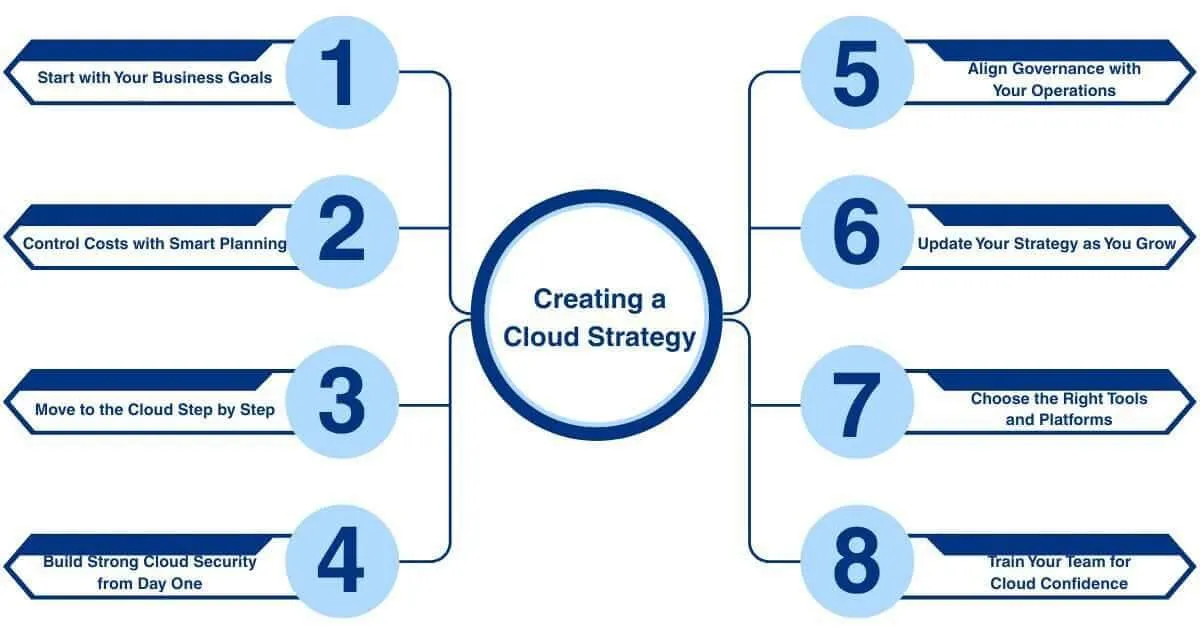
1. Start with Your Business Goals
Fix Partner begins by helping you answer a simple but essential question: Why the cloud, and why now? Whether you’re aiming to increase agility, reduce costs, or speed up innovation, we make sure your cloud strategy directly aligns with your business goals. We don’t just offer cloud for the sake of it—we help your business identify tangible outcomes and build a roadmap to get there.
2. Control Costs with Smart Planning
Cloud services can quickly add up if not managed carefully. Fix Partner works with your business to go beyond pricing comparisons and develop a cost strategy that tracks spending against performance. We apply best practices like FinOps to help you understand cost per function, monitor usage, and ensure that every dollar you spend in the cloud supports your business growth.
3. Move to the Cloud Step by Step
Rather than rushing into full-scale migration, we recommend a gradual approach. We help identify which workloads to move first, how to manage dependencies, and how to transition without disrupting business operations. Cloud adoption is a journey, and we make sure every step is measured, informed, and aligned with long-term success.
4. Build Strong Cloud Security from Day One
Security is a shared responsibility, and we help you understand your part. We support your team in defining access control, data protection policies, and compliance checks that fit your business. Just because infrastructure is off-site doesn’t mean you have to lose control. We ensure your data and users are protected from day one.
5. Align Governance with Your Operations
With Fix Partner, cloud governance becomes a tool for clarity, not a roadblock. We help your business define who can access what, how resources are monitored, and how decisions are made. As your operations evolve, our approach to governance keeps your teams aligned, your systems efficient, and your cloud usage purposeful.
6. Update Your Strategy as You Grow
The cloud—and your business—are constantly evolving. That’s why Fix Partner treats your cloud strategy as a living document. We help you revise your plan regularly based on new stakeholders, new services, or changes in business goals. This approach ensures your strategy always reflects where your business is today and where it’s going tomorrow.
7. Choose the Right Tools and Platforms
Public cloud? Private cloud? IaaS, SaaS, or PaaS? Fix Partner helps your business cut through the jargon and choose the service and deployment models that make sense for your needs. We tailor our recommendations to your operations, ensuring you adopt solutions that work together, not against each other.
8. Train Your Team for Cloud Confidence
The cloud is only effective if your people can use it confidently. We support both technical and non-technical teams through education, templates, and automation tools that make cloud services accessible and practical. Continuous learning is key, and we help build that confidence across your organization.
Cloud Strategy Template: What to Include
When it comes to Cloud Strategy and Implementation, there is no one-size-fits-all model. Every organization has its own goals, challenges, and technical maturity. But if you’re just starting to explore the cloud—or you’re trying to make your current cloud usage more strategic—it helps to begin with a simple framework.
At Fix Partner, we guide businesses through a practical approach to building their cloud strategy. Here’s what we believe every company should consider including in its plan.
Define the Purpose Behind the Strategy
Before diving into technologies or migration plans, start by answering the big question: Why are we moving to the cloud? For many businesses, this comes down to gaining agility, speeding up product delivery, improving resilience, or managing long-term costs. By clearly stating your purpose, you ensure that every technical decision later on ties back to something the business needs.
Identify Your Business Priorities
Now that you’ve defined the “why,” it’s time to add more detail. What are your current business goals, and how can the cloud support them? Are you trying to improve customer satisfaction? Reduce downtime? Scale your services across regions? These priorities should be specific and measurable. That way, you can track whether your strategy is delivering real results.
Acknowledge Current Challenges
Every cloud strategy starts with a baseline. What limitations are you facing today with your on-premises systems or current IT setup? Maybe your applications aren’t scaling with customer demand, or you lack robust analytics tools. These pain points help justify the move and point to the areas where the cloud can provide the most value. This is where many organizations begin to see the strategic benefits of cloud over simply managing infrastructure.
Set Tactical and Measurable Goals
Big-picture goals are great, but it’s equally important to break them down into tangible outcomes. For example, you may want to implement real-time data dashboards, enable faster software releases through DevOps, or ensure your systems have 99.99% uptime. These tactical goals give your cloud initiative structure and milestones to aim for.
Take Stock of Your Current IT Portfolio
What are you currently working with? This includes all your applications, databases, services, and legacy tools. Not everything needs to move to the cloud. Some apps may be outdated or unused. Others may be too critical to change quickly. Fix Partner helps businesses categorize these systems—what to move, what to update, and what to leave alone. This review helps reduce unnecessary complexity during migration.
Choose the Right Migration Strategies
Once you’ve mapped out your portfolio, you’ll need to decide how each item gets to the cloud. There are several migration methods:
- Rehosting (lift and shift): moving apps as-is
- Replatforming: making small adjustments
- Re-architecting: redesigning for the cloud
- Repurchasing: replacing with a cloud SaaS solution
- Rebuilding: building something entirely new
Each approach has different trade-offs in terms of time, budget, and business disruption. Choosing the right one is key.
Define Conditions for Success
What does success look like for your business in the cloud? It might include faster performance, lower costs, better customer experiences, or even internal benefits like easier IT management. You may also need to ensure your team is properly trained or that your systems meet regulatory compliance standards. Defining these success criteria early helps keep your team focused and accountable.
Build a Realistic Timeline
A cloud strategy without a roadmap is just wishful thinking. We recommend creating a timeline that includes stages like internal training, pilot projects, workload testing, and full-scale migration. This often spans months—not weeks—and should include regular reviews and checkpoints. Having a phased approach reduces risk and allows you to learn and adjust as you go.
Collaborate Across Teams
A successful Cloud Strategy and Implementation effort involves more than just IT. Marketing, operations, finance, and leadership all have a role to play. That’s why collaboration is at the core of our approach. By aligning technology with business needs, your cloud strategy becomes more than just a tech initiative—it becomes a business transformation.
Make It a Living Document
Finally, don’t treat your strategy as a one-time document. Business goals change. Cloud offerings evolve. Your needs will grow. At Fix Partner, we support our clients with ongoing reviews, updates, and advisory services to keep their strategy fresh and aligned with what matters most.
Ready to create your strategy?
Every company’s cloud journey is different. But with a clear, thoughtful template, your business can take confident steps toward smarter, faster, and more sustainable cloud adoption. We’re here to help you get started—and stay on track. Contact us today!

