


Running a business today means managing countless moving parts – from finance and logistics to people and customers. When these parts operate in isolation, it’s easy for information to get lost, processes to slow down, and opportunities to slip away. That’s where enterprise resource planning (ERP) comes in. ERP serves as a unified backbone for your organization, connecting every department and providing leaders with a single, accurate view of how the business is performing. Whether you’re a manufacturer, retailer, or service provider, ERP helps you work smarter, make decisions faster, and turn complexity into clarity.
What Is Enterprise Resource Planning?
Your business depends on many moving parts-finance, sales, human resources, and operations. When these functions don’t work together, inefficiencies can slow growth and decision-making. Enterprise resource planning (ERP) helps your business connect these essential areas in a single, unified system.
An ERP platform integrates key processes such as planning, purchasing, inventory, accounting, and marketing. By consolidating data into one platform, ERP improves visibility, reduces errors, and enhances collaboration across teams. It gives you a clear view of how your business operates and helps you make faster, more informed decisions.
Key Takeaways
- ERP software connects and manages all the core processes of your business.
- Modern ERP systems are often cloud-based, enabling secure, remote access.
- Benefits include smoother communication, accurate real-time data, and a single source of truth.
- Many ERP platforms are customizable to meet specific industry or company needs.
- A well-planned implementation is essential for ERP success and long-term value.
Understanding Enterprise Resource Planning
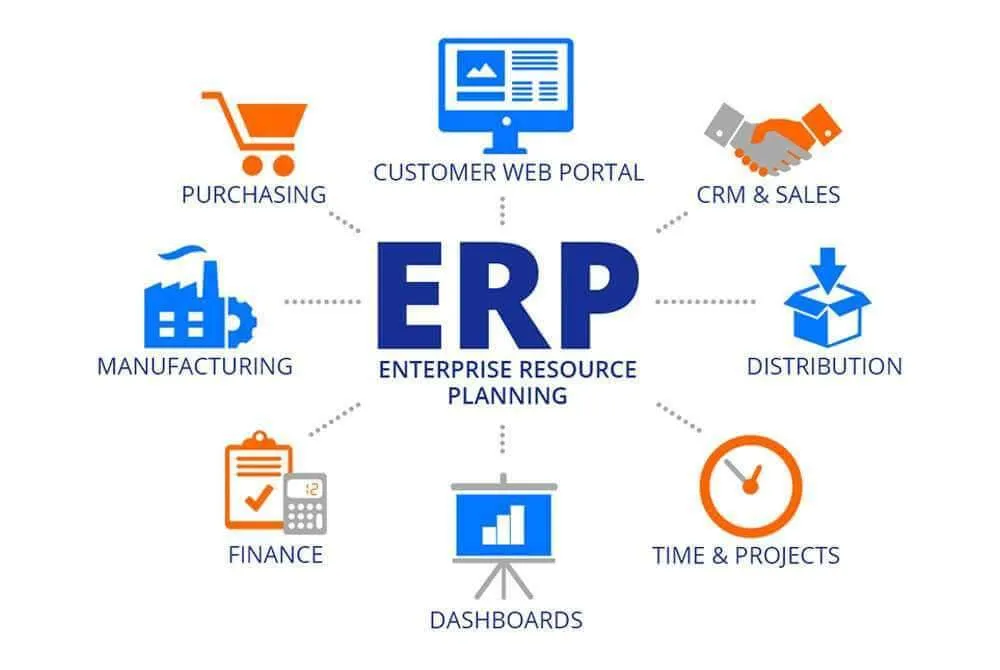
You can think of enterprise resource planning (ERP) as the link that unites all the key systems within your business. Without ERP, each department often works with its own tools designed for specific tasks, creating separate islands of information. With an ERP platform, each department still operates its own system, but they are all connected through a shared interface.
ERP enables smoother communication across departments by collecting and sharing information in real time. It gathers data about activities and performance from different areas-such as sales, operations, finance, and human resources-and makes this information accessible to the entire organization. This helps your business make smarter, faster decisions based on consistent and reliable insights.
An ERP system also helps your company become more aware of its overall operations by linking together once separate technologies. By doing so, it reduces costly duplication and removes incompatible systems that slow progress.
With ERP, critical functions like accounts payable, inventory control, order tracking, and customer management can all work together in harmony. This integration not only improves efficiency but also builds a stronger foundation for growth and long-term success.
How ERP Systems Work in Practice
Enterprise resource planning has come a long way from traditional software that depended on physical servers and manual data entry. Today, ERP systems have transformed into flexible, cloud-based platforms that allow secure web access from anywhere. Instead of owning the entire system, your business can now rent services directly from the provider, who manages updates, security, and maintenance.
Your business can choose the specific ERP applications it needs, while the provider hosts them on dedicated servers. Both sides then work together to integrate your company’s data, workflows, and processes into one connected system. Once everything is synchronized, all departments share access to accurate, real-time information.
With ERP, reports and dashboards can be created instantly, offering visual insights into performance, costs, and progress across departments. These tools make it easier for leaders to track results and guide smarter decisions.
Recommendation
Careful planning is essential when implementing an enterprise resource planning (ERP) system. A rushed or poorly managed rollout can result in unexpected costs or delays. However, when executed strategically, ERP becomes a strong foundation that connects the entire organization and supports sustainable, long-term growth.
Different Types of ERP Systems
There are several types of enterprise resource planning (ERP) systems available, each designed to meet different business needs and levels of complexity. While these systems vary in scope and functionality, understanding the options helps identify the ERP solution that best aligns with your organization’s goals, size, and resources.
- On-Premise ERP: An on-premise ERP system involves purchasing software licenses and installing them directly on your company’s own servers. This option gives your business full control over data and customization but requires dedicated IT support for updates, maintenance, and security.
- Cloud ERP: Cloud-based ERP systems are hosted remotely and accessed online. These solutions offer flexibility and scalability through subscription pricing. Since the ERP provider handles maintenance and upgrades, your business can save on hardware costs and focus on operations.
- Industry-Specific ERP: Some ERP systems are built for specific industries such as manufacturing, finance, or healthcare. These versions include specialized modules and workflows that match the requirements of each sector, improving efficiency and compliance.
- Open-Source ERP: Open-source ERP solutions allow your business to access and modify the software’s source code. This approach offers deep customization but requires technical expertise to maintain and secure the system effectively.
- Small Business ERP: Smaller ERP platforms are tailored for small and medium-sized businesses. They offer essential features at a lower cost and are easier to implement with minimal customization.
- Tiered ERP: Tiered ERP systems provide scalable options for different business sizes. Your company can start with basic functionality and add modules as your operations grow-such as expanding to international markets or managing multiple currencies.
Benefits of ERP
Companies adopt enterprise resource planning (ERP) for many reasons-growth, cost savings, or to improve efficiency across operations. While the specific results may differ from one organization to another, several key advantages are consistently recognized.
- Streamlines Operations and Boosts Productivity: By integrating and automating processes, ERP reduces duplication and enhances accuracy. When departments share connected workflows, teams can coordinate better and achieve faster, higher-quality outcomes.
- Strengthens Data and Reporting Accuracy: ERP systems give your business access to complete, real-time data from a unified platform. Reliable reporting helps you plan budgets, forecast with confidence, and clearly communicate performance to teams and stakeholders.
- Improves Efficiency Across the Organization: ERP enables quick access to essential information for customers, vendors, and partners. This results in faster responses, greater accuracy, and improved satisfaction-all while lowering operational costs through smarter resource use.
- Fosters Collaboration and Employee Engagement: ERP promotes teamwork and information sharing across departments. A more connected workforce boosts productivity and morale, as employees can see how their roles contribute to the company’s success. By reducing repetitive manual work, ERP allows your team to focus on meaningful, value-added activities.
Recommendation
ERP software also delivers total visibility, allowing management to monitor performance and make informed, data-driven decisions.
Challenges of ERP
Implementing enterprise resource planning (ERP) does not automatically solve every challenge or remove inefficiencies within a business. Sometimes, the organization itself must reassess its structure and processes to fully benefit from the system. Without this adjustment, there’s a risk of ending up with tools that don’t align or function as expected.
Companies often struggle to realize the full potential of enterprise resource planning when they resist updating long-established workflows. Relying on legacy processes or software that once delivered results can prevent smooth integration and limit the impact of a new ERP initiative. Another common challenge appears when implementation efforts are broken into smaller, uncoordinated projects, which can easily lead to misalignment, cost overruns, and reduced effectiveness.
Recommendation
Applying effective change management principles throughout the ERP life cycle can greatly reduce the risk of failure. By guiding employees through new workflows, addressing concerns early, and maintaining open communication, your business can ensure that enterprise resource planning delivers the intended results and long-term value.
ERP vs. CRM: Understanding the Difference
Enterprise resource planning (ERP) and customer relationship management (CRM) are both essential systems that support different aspects of a company’s success. While they share the goal of improving performance and efficiency, their focus areas and functions set them apart.
ERP is designed to manage internal business operations, integrating and automating key functions such as finance, supply chain, human resources, and inventory management. This creates a unified system that connects departments, improves data accuracy, and supports better decision-making.
CRM, on the other hand, focuses on external relationships, helping your business manage interactions with customers, prospects, and partners. It tracks sales leads, marketing campaigns, and customer service inquiries to enhance satisfaction, loyalty, and retention.
Although ERP and CRM have different objectives, they often overlap in practice. Many modern enterprise resource planning systems now include CRM features, allowing data such as contact information, purchase history, and communications to flow seamlessly between the two. This integration ensures that customer insights inform operational planning and that internal efficiency supports excellent customer experiences.
For instance, while a CRM system might record a customer’s purchase history, linking that information with ERP enables your business to forecast demand, manage inventory levels, and allocate resources more effectively. The result is a stronger connection between business operations and customer engagement, leading to more consistent performance and long-term growth.
Leading ERP Providers and Real-World Examples
Enterprise resource planning (ERP) has proven to be a powerful solution for businesses seeking better efficiency, data accuracy, and collaboration across departments. By integrating operations into a single system, ERP enables organizations to make informed decisions, streamline workflows, and scale effectively. The following real-world examples highlight how companies from different industries have benefited from ERP implementation.
1. Ronin Gallery
New York’s Ronin Gallery once relied on paper-based inventory tracking and separate accounting software. After transitioning to Oracle NetSuite products-including NetSuite ERP, the gallery saw employee productivity double. With all inventory and consignment data centralized and accessible, staff could easily manage operations and deliver personalized recommendations to more than 30,000 customers.
2. N&N Moving Supplies
N&N Moving Supplies faced challenges managing financial and business data spread across multiple systems as the company expanded. Implementing NetSuite ERP allowed the business to consolidate data, improve accuracy, and streamline operations. Payroll processing time was reduced by 84%, and time tracking across various locations became significantly more precise.
3. Green Rabbit
Green Rabbit, a logistics company specializing in perishable goods, previously operated using standalone accounting tools, spreadsheets, and email. This fragmented system created communication gaps and unsynchronized data, leading to inefficiencies. By adopting ERP software, the company reduced inventory errors, improved order fulfillment, and achieved synchronized, error-free data. As a result, Green Rabbit successfully tripled its order volume while maintaining accuracy and efficiency.
How FIX Partner Can Help Your Business with ERP Solutions
Implementing enterprise resource planning (ERP) can transform the way your business operates-streamlining processes, improving collaboration, and enabling smarter decision-making. At FIX Partner, we help organizations adopt and manage ERP systems effectively to maximize efficiency and long-term growth.
Here are several ways FIX Partner can support your business throughout the ERP journey:
- Tailored ERP Strategy: Every business has unique goals and challenges. FIX Partner works closely with your team to design an ERP strategy aligned with your operational model, ensuring that the solution addresses your specific needs rather than forcing generic workflows.
- Seamless Integration: We ensure your ERP system connects smoothly with existing tools-such as CRM, payroll, and e-commerce platforms, so information flows accurately across all departments. This unified approach helps eliminate duplication and enhances productivity.
- User-Centric Design and Training: FIX Partner emphasizes intuitive system design and comprehensive user training. Our goal is to make the ERP easy to adopt so your team feels confident and capable using it from day one.
- Scalable and Flexible Implementation: As your business grows, your ERP system should grow with it. We build scalable architectures that handle increasing data, users, and transactions without disruption-keeping your operations running efficiently.
- Mobile and Remote Accessibility: With modern workplaces requiring flexibility, FIX Partner ensures your ERP system is accessible from anywhere. Mobile features empower your teams to make decisions and stay productive on the go.
- Data Security and Compliance: Protecting your business data is a top priority. Our ERP implementations include advanced security measures such as encryption, role-based access, and compliance with industry standards to ensure your information remains safe and reliable.
- Data Insights and Reporting: FIX Partner helps your business leverage ERP’s built-in analytics to turn data into actionable insights. Real-time dashboards and reporting tools support faster, evidence-based decision-making across departments.
- Dedicated Support and Maintenance: Our commitment doesn’t end after deployment. FIX Partner provides continuous support, system updates, and performance optimization to ensure your ERP investment remains valuable over time.
- Cost Transparency and Long-Term Value: We guide you through every cost consideration implementation to ongoing maintenance-helping you understand your total cost of ownership and plan for future growth without surprises.
Partnering with FIX Partner means more than just installing software-it means building a foundation for sustainable success. Through strategic planning, seamless integration, and continuous improvement, we help your business unlock the full potential of enterprise resource planning and achieve meaningful, lasting results.
Conclusion: Building a Connected Future with ERP
Enterprise Resource Planning is more than an operational tool – it’s a strategic framework that connects people, processes, and technology. By providing a unified source of truth, ERP eliminates silos and enhances collaboration across every department. However, successful ERP adoption requires more than software. It demands commitment, training, and a willingness to reimagine how your organization operates. When implemented thoughtfully, ERP helps businesses achieve what matters most: efficiency, agility, and long-term growth.
Contact FIX Partner to discover how we can help your business design, implement, and optimize an enterprise resource planning solution that drives measurable success and lasting fulfillment.

