


Picture a fierce competition. Almost half a million skilled professionals fight for only 85,000 slots to work in the U.S. each year. That is the reality of the H-1B visa — a program for highly trained foreign workers. Many call it the “golden ticket” to building a career in the world’s largest economy. With the sharp rise in the H-1B visa fee, this race has become even tougher and more uncertain.
The H-1B visa exists to fill skill gaps in the U.S. workforce. It enables companies to hire engineers, scientists, programmers, and other specialists when they cannot find sufficient local talent. Each year, 65,000 visas go through a lottery system. Another 20,000 are reserved for U.S. graduates with advanced degrees. Demand is overwhelming. In 2025, over 470,000 applications competed for these limited spots.
Why Silicon Valley Relies on It
Tech giants depend heavily on the H-1B visa. In the first half of 2025, Amazon won approval for more than 10,000 applications. Microsoft, Meta, Apple, and Google also ranked among the top users. For these firms, the visa is not just paperwork. It is a lifeline that allows them to stay competitive and attract world-class talent. The new H-1B visa fee now raises concerns. Even powerful companies may struggle to balance costs and talent needs in the future.
India’s Outsourcing Backbone
In India, the H-1B visa powers a $280 billion outsourcing industry. Firms like Tata Consultancy Services (TCS) and Infosys have long depended on it to send engineers to U.S. clients such as Citigroup and Walmart. The scale is striking. In 2024, Indian nationals received 71% of all H-1B visas. That makes the program a crucial bridge between the two countries. The new $100,000 H-1B visa fee forces Indian firms to rethink their strategies and adjust their global plans.
More Than Just a Visa
The H-1B visa is more than a work permit. It drives the flow of knowledge, skills, and opportunities across borders. For the U.S., it supports leadership in technology, science, and advanced industries. For India, it has fueled one of the world’s biggest outsourcing success stories. But with the new H-1B visa fee, the bridge between two tech giants now faces its toughest challenge.
“America First” Strategy
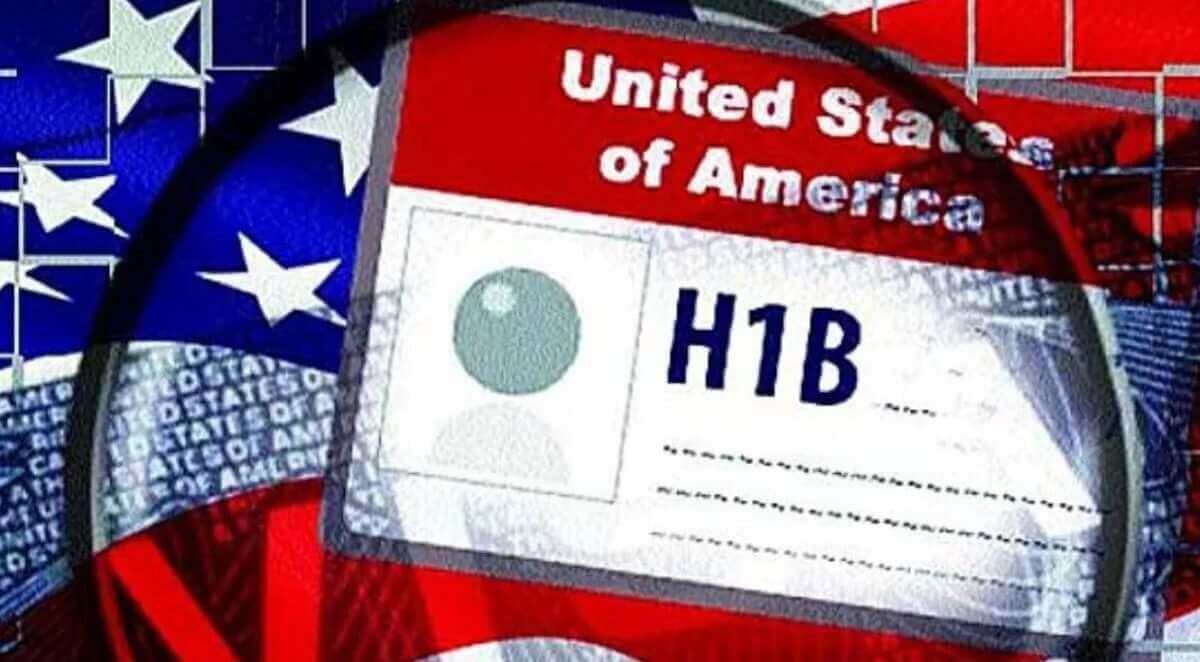
And then the bridge began to shake. On September 19, President Donald Trump signed an order imposing a record-breaking $100,000 fee on every new H-1B visa application, effective September 21. While the rule does not affect people who already hold the visa or those in the process of renewal, it strikes a heavy blow at the future of the program.
The White House explained this decision as part of Trump’s “America First” strategy. The goal is to curb what officials call the “abuse” of the H-1B system — a practice they argue suppresses wages for American workers and encourages outsourcing of IT jobs. By raising costs sharply, the administration hopes to push companies to prioritize domestic hiring.
This step, however, is only the beginning. Trump’s reform roadmap also includes new labor rules that will lift the minimum wage for H-1B holders. In addition, the Department of Homeland Security is expected to introduce a regulation that gives priority to the highest-paid applicants during the lottery process.
The message is blunt: if U.S. companies want to hire foreign professionals, they must be ready to pay a very high price and prove that these workers are truly exceptional.
Silicon Valley Shaken, India on Edge
President Trump’s announcement sent shockwaves through two continents. In Silicon Valley, confusion spread quickly. Some companies even advised staff not to leave the United States until the White House clarified that the new rule only applied to fresh H-1B applications.
Fears in the U.S. Economy
Economists wasted no time raising red flags. Atakan Bakiskan from Berenberg Bank called the move a classic case of “anti-growth policymaking.” He warned that making foreign talent so costly could trigger a “brain drain,” dragging down U.S. productivity.
Artificial intelligence investments, he argued, could not easily offset the loss of skilled people. His bank cut its forecast for U.S. economic growth from 2% to 1.5%, adding that even this lower figure “may soon look optimistic.”
While giants like Amazon, Microsoft, and Google may afford the higher costs, other sectors that depend on the H-1B program — such as healthcare and education — could struggle to recruit the people they need.
India Feels the Aftershocks
The epicenter of the storm, however, is in India. The country’s $280 billion outsourcing industry now faces what experts call a “rewrite of the rules.” On the first trading day after Trump’s announcement, shares of Infosys and Tata Consultancy Services (TCS) fell about 3%.
For Infosys, which received more than 2,500 H-1B visas in fiscal 2024, the new $100,000 fee could add at least $250 million in costs. That scale of expense forces firms to reconsider their long-term strategy.
The Indian government expressed concern about the humanitarian impact, warning that many families could see their lives disrupted. On social media, reactions were mixed — some voiced deep worry, others framed the move as recognition of India’s rising talent. Trade Minister Piyush Goyal remarked: “They [the U.S.] also fear our talent, and we do not object to that.”
A Risk of Backfire
Trump’s goal is to protect American jobs. But experts see a risk that the policy could backfire. Bhaskar Rao, CEO of Digital Sea, argued that higher labor costs might push U.S. firms to expand global capability centers in India instead of hiring locally. Microsoft, Google, and Goldman Sachs already operate such centers on a large scale.
“If they cannot outsource in the U.S., they will expand in India,” Rao explained. Ironically, the policy could accelerate the shift of jobs away from America.
Adapting to a New Reality
Indian IT firms are not sitting idle. Since Trump’s first term, companies like Infosys and TCS have reduced reliance on H-1B visas by hiring more workers directly in the U.S. and building local service centers. The new $100,000 fee will not kill them, but it will push them to speed up this transition. Some may pivot more toward costly onshore consulting, while others double down on remote offshore services.
A Political and Economic Gamble
The future remains uncertain. “This decision will almost certainly face challenges in court, and the tech industry will exert heavy pressure to reverse it,” Rao predicted. A shock of this scale in the talent pipeline is unlikely to serve America’s long-term interests.
Ultimately, the $100,000 H-1B visa fee is not just a financial barrier. It signals a deep shift in U.S. immigration policy, a stress test for global corporations, and a geopolitical gamble. At stake are the careers of hundreds of thousands of skilled professionals and the flow of talent that fuels global innovation.
As one analyst put it: “With Trump, nothing is ever certain.”
FIX Partner: Simplifying H-1B Transitions, Supporting Your Business
Moving talent across borders is more than paperwork—it’s about keeping your business running smoothly while ensuring your people feel at home. FIX Partner provides complete support, from visas to daily life, so your specialists can focus on what matters: delivering results.
What We Deliver
- Visa & Compliance: Manage H-1B, residency, and labor law requirements.
- Housing & Family: Provide safe housing, quality schools, and accessible healthcare for employees.
- Business Continuity: Provide office setups, IT systems, and admin support.
- HR & Payroll: Handle contracts, salaries, and tax compliance.
- Cultural Fit: Offer language training and cultural orientation.
- Local Access: Connect with partners, suppliers, and business networks.
- Wellness & Safety: 24/7 support for emergencies and employee well-being.
- Ongoing Partnership: Stay by your side for renewals and future needs.
With FIX Partner, relocation becomes a long-term advantage, not a disruption.
Conclusion
The $100,000 H-1B visa fee marks more than a policy change—it reshapes global talent flows, challenges businesses on both sides of the world, and tests the resilience of U.S.–India ties. For companies, the real question is not just how to pay the price, but how to adapt and stay competitive in a shifting global landscape. Contact FIX Partner to keep your business resilient, compliant, and prepared for the future.

