



Expert API Integration Services for Your Business
Your business runs on many moving parts—sales, marketing, finance, operations, and customer service. Each area relies on its own software tools to keep things moving. But if these tools don’t talk to each other, they can slow your entire business down.
That’s where API integration services come in. They act as the invisible connectors that link your software systems together, allowing them to share data instantly and work in harmony.
Understanding how API integration works—and how it can transform your business—doesn’t require an IT background. It only takes seeing how much easier, faster, and more accurate your operations can become when your systems start working as one.
What Are API Integration Services?
API stands for Application Programming Interface. You can think of it as a digital messenger. It takes requests from one software system, delivers them to another, and brings the response back.
But your business likely uses many different systems—your CRM, e-commerce platform, accounting software, inventory tools, and maybe even custom apps. Without a bridge between them, these systems work in isolation.
API integration services build that bridge. They link your separate systems so they can exchange data automatically and accurately. Instead of employees manually copying data from one place to another, your systems communicate in real time, behind the scenes.
The result: faster workflows, fewer errors, and a more connected digital foundation for your business.
The Role of API Integration in Driving Your Business Forward
1. Why Your Business Needs API Integration
Your business depends on many software tools—CRM, accounting, e-commerce, and more. But when these systems don’t communicate, your team wastes time, and your customers notice the delays. API integration services solve this problem by linking your systems so they can share data instantly.
Here’s how integration can transform your business:
Eliminate Manual Tasks Through Automation
Manual data entry is slow and error-prone. Imagine your sales team closes a deal in your CRM, and someone must manually create an invoice in your accounting system. With API integration, the invoice appears automatically. This automation cuts errors and frees your team to focus on meaningful work instead of repetitive tasks.
Deliver a Faster Customer Experience
Customers expect instant responses. Real-time stock updates, automatic order confirmations, and live shipping status all depend on connected systems. API integration ensures every part of your business—from your website to your warehouse—shares information instantly, giving customers the fast, accurate service they expect.
Keep Your Data Consistent Everywhere
When systems are isolated, data becomes inconsistent. Your sales team might update a customer’s email, but your marketing platform still uses the old one. Integration synchronizes data across systems, so everyone in your business sees the same accurate information at the same time.
Support Growth Without Disruption
As your business grows, you’ll add new software tools. Without integration, each new tool creates more manual work. API integration services let you connect new platforms quickly, keeping your operations smooth as you scale.
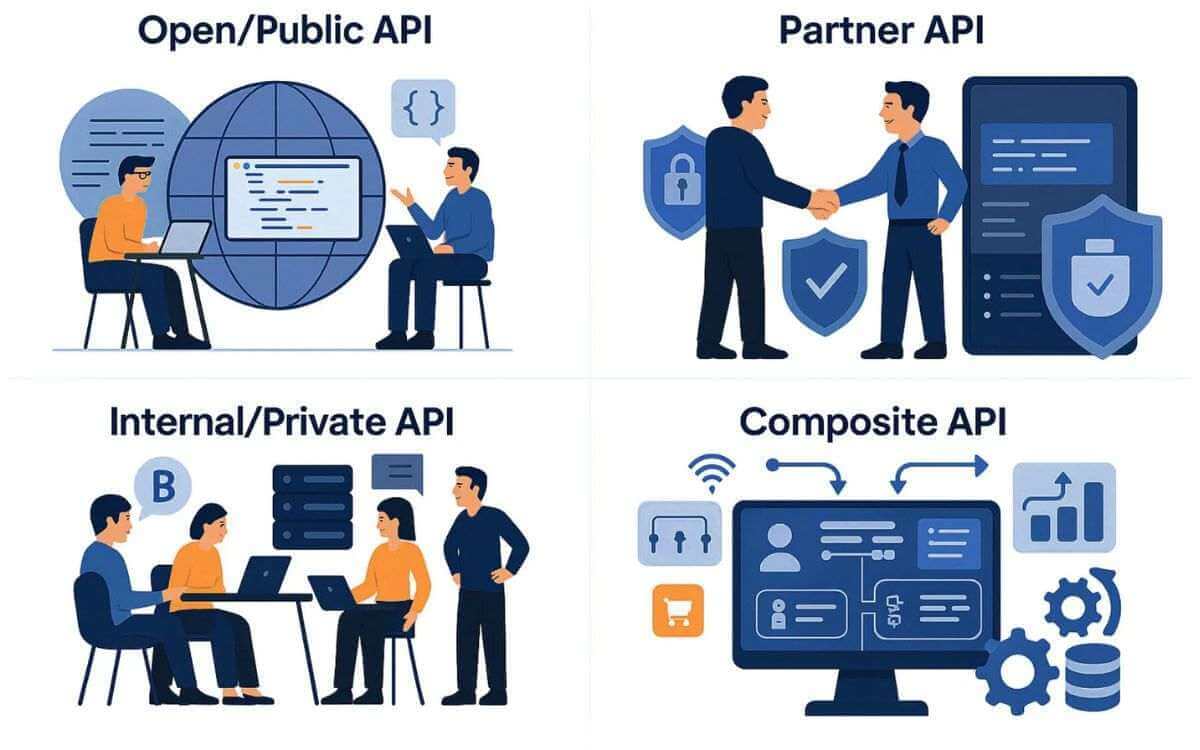
2. Types of API Integration for Your Business
Your business relies on many digital tools—CRM, marketing platforms, accounting software, and more. When these tools don’t communicate, your team spends extra time moving data manually and risks making costly mistakes. API integration services solve this by linking your systems so they can share information automatically and work as one.
Here are the main types of API integration and how they can support your business:
System-to-System Integration
This connects two or more of your internal systems to exchange data. For example, linking your CRM with your email marketing platform ensures that any new customer added to your CRM is automatically added to your email list. It saves time, reduces errors, and keeps data consistent across departments.
Third-Party Service Integration
This links your internal systems with external services such as payment gateways, shipping providers, or social media platforms. Instead of building these features from scratch, you can plug them directly into your workflows. It speeds up operations, improves customer experience, and lets your business offer more without extra development costs.
Cloud and On-Premise Integration
Many businesses use a mix of cloud-based and local systems. This type of integration bridges those environments so they work together. It allows real-time data sharing and seamless workflows, meaning your team can access accurate information from anywhere without switching between platforms.
Custom API Development
Sometimes standard APIs don’t match your unique processes. In that case, custom APIs are designed specifically for your business. They give you full control over how your systems communicate—what data they exchange, how often, and in what format. This flexibility ensures your technology aligns perfectly with your workflows and can scale as your operations grow, without forcing you to change how you work.
3. How API Integration Benefits Your Business
When your business systems start sharing information automatically, the impact goes far beyond technology—it reshapes how your team works and how your customers experience your brand. Here’s how API integration can deliver measurable value:
Make Decisions Faster
When data lives in separate systems, you waste time collecting and reconciling it. API integration brings all your business data into one connected view, updated in real time. That means you can see sales performance, stock levels, and customer feedback instantly, without waiting for end-of-week reports. Faster insights lead to faster, more confident decisions.
Reduce Costs
Manual processes come with hidden costs—duplicate effort, human error, and delays. Integrating your systems automates these repetitive tasks, reducing errors and freeing up employee time. While there’s an upfront investment, businesses often see long-term savings through higher productivity, fewer mistakes, and better resource allocation.
Strengthen Team Collaboration
When every team has access to the same accurate data, collaboration becomes easier and more effective. Sales, marketing, finance, and customer service can align their efforts instead of working from conflicting information. This shared visibility helps everyone focus on common goals and improves communication across departments.
Gain an Edge Over Competitors
Businesses that react quickly to market changes or launch new services faster often pull ahead of competitors. API integration gives your business that agility—letting you adopt new tools, connect platforms, and roll out features without disrupting operations. This adaptability helps you stay competitive in fast-moving markets.
Challenges to Plan For
Integrating your business systems can unlock big benefits, but it also comes with challenges. Recognizing these early will help you plan and avoid surprises.
Technical Complexity
Many business tools weren’t originally built to connect. Trying to make them exchange data smoothly can get complicated, especially if each system uses different formats or rules. This is why partnering with an experienced provider of API integration services is crucial. They can map out how your systems should interact and handle the technical details, so you don’t have to.
Data Security Risks
When data flows between systems, it becomes more exposed to potential breaches. Protecting sensitive information—like customer details or financial records—must be a top priority. A reliable integration partner will build secure APIs using encryption, authentication, and strict access controls to keep your data safe while it moves between platforms.
Employee Adjustment
Even positive changes can disrupt familiar routines. Your team may be comfortable with their current tools and hesitant to adopt new workflows. To reduce resistance, plan for open communication, practical training, and hands-on support. Helping employees understand the benefits will build confidence and make the transition smoother.
Choosing the Right Integration Partner for Your Business — with FIXPartner
At FIXPartner, we know API integration isn’t just about connecting systems—it’s about building a stronger foundation for your business. Choosing the right partner can make the difference between a smooth transformation and ongoing frustration. Here’s what to look for when selecting an integration partner—and how we approach it.
Relevant Experience
Your business deserves a partner who understands your world. We’ve worked with companies across various industries, including retail, logistics, finance, and manufacturing. This experience enables us to quickly understand your challenges, speak your language, and design solutions that align with your actual operational needs.
Strong Technical Skills
Behind every seamless integration is solid technical expertise. Our team is fluent in connecting diverse systems, from cloud-based platforms to on-premise tools, and we follow strict security standards to keep your data safe. This means you get stable, reliable integrations—even when your setup is complex.
Tailored Solutions
No two businesses work the same way. Instead of forcing you into generic connectors, we take time to understand your workflows, goals, and growth plans. We then build a custom integration strategy designed specifically for your business, ensuring it truly supports how you operate.
Ongoing Support
Integration isn’t a one-off project. As your business adopts new tools, your integrations need to evolve too. FIXPartner stays with you long after launch, offering continuous monitoring, maintenance, and updates to keep everything running smoothly.
Preparing Your Business for Integration
Before starting, it helps to:
- Map your current systems and how they (don’t) connect
- Identify bottlenecks, delays, and data issues
- Define clear goals for what you want to improve
- Choose an integration partner who understands your business
With the right plan—and the right partner—FIXPartner can transform your scattered tools into a unified system that drives your business forward.
A Practical Example: Retail Business Integration
Imagine your business runs both a physical retail shop and an online store. Each side uses separate systems for sales, inventory, and shipping. At first, this seems manageable—but over time, the gaps between systems create real problems.
Before Integration
- Staff manually update stock levels on each platform, often leading to overselling and backorders.
- Online orders can sit unnoticed for hours before warehouse staff see them, delaying delivery.
- Customer service needs to jump between systems just to answer basic questions, frustrating your team and your customers.
After API Integration
With API integration, your sales, inventory, and shipping systems start working together automatically:
- Inventory updates across every platform in real time as soon as an item sells.
- Orders instantly flow to your warehouse system, so fulfillment starts right away.
- Customer service can view order history, payment, and shipping details with one click.
Real-World Example: Shopify Omnichannel Retail
A great example comes from Shopify’s omnichannel retail case study. One retailer connected its in-store point of sale, online store, and warehouse using APIs. Before integration, staff spent hours reconciling inventory each week. After integration, stock levels automatically sync across all locations, and customers can see real-time availability online.
This cut order processing time by 50% and reduced customer complaints about out-of-stock items by over 30%. It also gave their staff more time to focus on upselling and improving the in-store experience—activities that directly boosted revenue.
Conclusion
APIs are like the messengers that carry information between your systems, and integration is what makes those messages flow smoothly.
By investing in expert API integration services, your business can replace slow manual work with automated workflows, gain accurate real-time data, and deliver faster service to your customers.
This isn’t just a technical upgrade—it’s a business strategy. When your systems work together, your whole business becomes faster, more flexible, and better prepared for growth.

