



Exploring Hybrid Cloud Solutions for Your Business
For many business leaders, the cloud often feels like a complex puzzle. On one side, there is the public cloud with its flexibility, scalability, and cost efficiency. On the other hand, there is the private cloud, offering tighter control, higher security, and compliance advantages. Choosing one over the other can seem limiting, especially when modern businesses require both agility and security simultaneously. This is where hybrid cloud solutions step in. Rather than forcing organizations to choose between public and private, hybrid cloud blends the strengths of both. For executives, managers, and decision-makers outside the IT department, the concept may sound technical—but the reality is simpler. A hybrid cloud strategy is about striking the right balance of speed, cost savings, and security, without locking you into a single path.
The following sections break down what hybrid cloud means, why it matters, and how businesses can practically adopt it to create value.
What Exactly Are Hybrid Cloud Solutions?
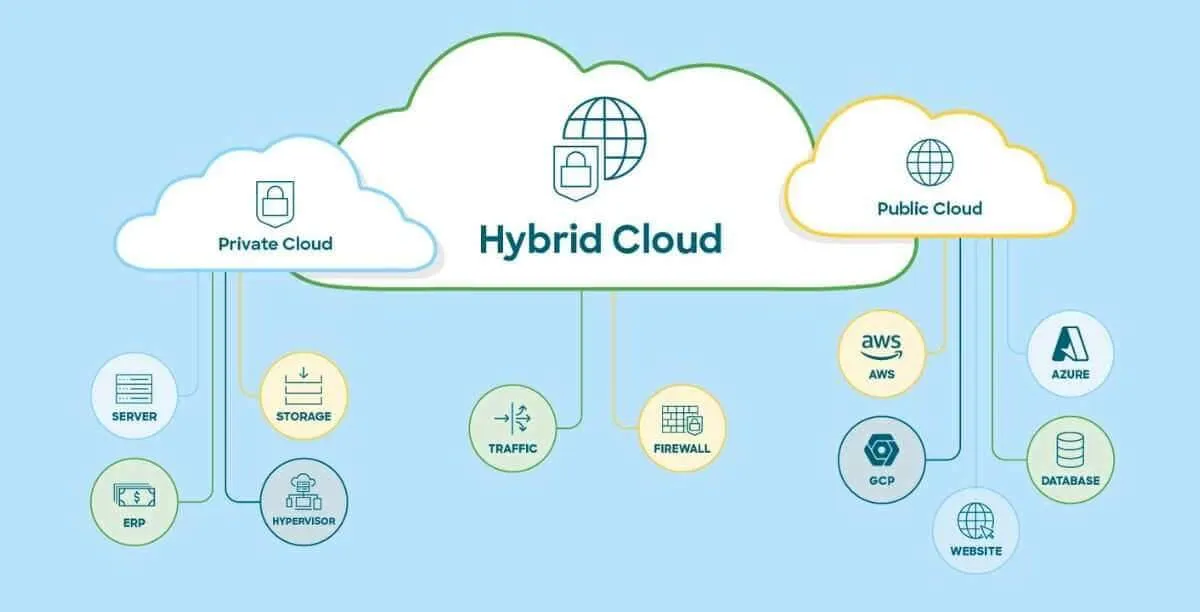
At its core, a hybrid cloud combines two environments:
-
Public cloud services are provided by vendors like AWS, Microsoft Azure, or Google Cloud.
-
Private cloud infrastructure that may be hosted on-site or through a dedicated provider.
These two systems don’t work in isolation—they are connected, so workloads and data can move between them seamlessly.
Think of it like managing your company’s finances: you might keep part of your capital in a secure fixed deposit (private cloud) for safety, while also using a flexible current account (public cloud) for day-to-day transactions. The hybrid approach is about using both, depending on the situation.
Why Businesses Are Turning to Hybrid Cloud
For executives outside of IT, the term hybrid cloud solutions may sound highly technical. In reality, it’s a practical strategy many organizations are adopting to stay agile, secure, and cost-efficient. Rather than choosing between public and private clouds, the hybrid approach blends both, giving businesses the best of two worlds. Let’s look at the main reasons behind this shift.
1. Flexibility Without Compromise
Every business faces fluctuations—whether it’s a seasonal sales surge, a product launch, or sudden growth. Public cloud resources can scale quickly to handle peaks, while private cloud infrastructure keeps critical operations stable. Hybrid solutions let companies adapt without being forced to compromise.
2. Balancing Cost and Value
Public cloud often looks cheaper because you only pay for what you use. But for steady, predictable workloads, a private cloud can be more economical over time. A hybrid model ensures each workload is placed in the right environment, optimizing both performance and cost efficiency.
3. Strengthened Security and Compliance
Regulated industries such as finance, healthcare, and manufacturing cannot afford risks with sensitive data. Hybrid cloud allows organizations to keep confidential information in private infrastructure while running less sensitive tasks on the public cloud. This creates a secure, compliant, and balanced ecosystem.
4. Future-Proofing the Business
Technology changes faster than most companies can predict. A hybrid approach reduces the risk of vendor lock-in and makes it easier to integrate new tools, platforms, or innovations as they emerge. This flexibility means companies can evolve without rebuilding their IT foundation.
Breaking Down the Benefits in Simple Terms
For many business leaders, hybrid cloud solutions can sound like another piece of technical jargon. In reality, the benefits are straightforward and deeply connected to how organizations run day-to-day. By blending public and private cloud resources, companies can protect operations, speed up innovation, and strengthen collaboration.
1. Business Continuity and Disaster Recovery
No company is immune to disruptions. Imagine your office servers suddenly going offline—whether from hardware failure or a cyberattack. With a hybrid setup, data and backups stored in the public cloud can be restored quickly. This minimizes downtime, reduces financial losses, and most importantly, protects your brand reputation and customer trust.
2. Faster Innovation and Experimentation
Innovation often requires testing ideas without fear of wasting resources. Hybrid cloud allows teams to experiment in the public cloud, where computing power is on-demand and cost-effective. Once a project proves valuable, it can be shifted into the private cloud for long-term security and control. This process shortens the journey from concept to execution.
3. Improved Collaboration Across Locations
In today’s global work environment, teams rarely sit under one roof. Hybrid cloud makes it easier for employees in different offices—or even countries—to access shared resources securely. This ensures consistent performance for remote staff while maintaining strict data governance. The result is smoother collaboration without compromising compliance.
Challenges You Should Be Aware Of
Adopting hybrid cloud solutions can unlock flexibility, security, and cost efficiency, but it’s not without its obstacles. For executives outside IT, it’s important to recognize these challenges early so that the business can make informed decisions and avoid unexpected pitfalls.
1. Integration Complexity
One of the most common hurdles is integration. Connecting private and public cloud environments isn’t always straightforward. Systems must be compatible, and data must flow securely between them. If not managed carefully, businesses risk inefficiencies, data silos, or even security vulnerabilities. The challenge is less about technology itself and more about planning the architecture correctly.
2. Management Overhead
Operating in a hybrid model means managing two environments at once. Monitoring, optimizing, and securing both public and private systems requires a skilled IT team. For smaller companies, this responsibility can feel overwhelming at first. Without the right governance framework, businesses may struggle to balance resources effectively.
3. Cost Mismanagement
Hybrid cloud promises cost savings, but poor monitoring can quickly turn it into a financial burden. Public cloud costs, in particular, can escalate if usage is not tracked and controlled. Establishing clear cost governance—such as usage dashboards or automated alerts—helps prevent overspending and keeps hybrid adoption financially sustainable.
Practical Steps to Adopt Hybrid Cloud with FIX Partner
For many decision-makers, hybrid cloud solutions can feel like a complex IT discussion. In reality, adopting them is less about technology itself and more about aligning cloud strategy with business goals. At FIX Partner, we see hybrid cloud as a practical way to give your business flexibility, security, and cost efficiency without compromise. To make it work, leaders should take a structured approach.
Step 1: Define Business Objectives
The starting point is clarity. Before investing in infrastructure, ask: What do we want the hybrid cloud to achieve? Is it reducing IT costs, ensuring compliance with regulations, or accelerating product launches? By aligning business objectives with technology decisions, your business ensures measurable outcomes rather than vague promises.
Step 2: Identify Workload Placement
Not every application should move to the cloud. Sensitive workloads such as customer data may need to remain in private systems, while high-traffic services or seasonal campaigns can benefit from the scalability of the public cloud. Carefully mapping workloads helps maximize both security and efficiency.
Step 3: Choose the Right Providers
Selecting a cloud provider is as much a business decision as it is a technical one. Beyond features, consider reliability, compliance certifications, global coverage, and customer support. Strong vendor relationships reduce risk and ensure long-term alignment with your business needs. FIX Partner helps evaluate and connect you with the right providers.
Step 4: Build a Strong Governance Framework
Hybrid cloud thrives on balance. This requires clear governance: monitoring costs, setting security protocols, and defining who has access to which resources. A governance framework keeps your hybrid strategy sustainable and cost-effective.
Step 5: Train and Upskill Teams
Even the best-designed system will underperform without people who can manage it. Training your employees or collaborating with external experts ensures your business extracts maximum value. FIX Partner provides expertise and training support to help your teams succeed.
Adopting hybrid cloud is not about rushing into the latest trend—it’s about building a foundation for agility, security, and growth. FIX Partner works alongside businesses to design strategies that are practical, scalable, and tailored to real-world needs.
How to Measure Success with Hybrid Cloud
Adopting hybrid cloud solutions is only the first step—understanding whether they deliver real value is what matters most. For executives outside IT, measuring success should focus on outcomes that directly impact business growth.
- Reduced IT Spending: One of the clearest indicators is cost. Compare current expenses with a single-cloud or traditional on-premises setup. Hybrid models should demonstrate savings through smarter workload distribution.
- Faster Deployment: Speed to market is another metric. If your business can launch new applications or services more quickly, it signals that the hybrid strategy is driving agility.
- Improved Uptime and Recovery: Downtime is costly. Measuring system availability and recovery speed during disruptions reflects how resilient your operations have become.
- Better Compliance and Reporting: A successful hybrid cloud also strengthens audit readiness, ensuring your business meets industry regulations without delays.
Real-World Scenarios with Hybrid Cloud Solutions
When leaders hear about hybrid cloud solutions, the concept may feel abstract. But the real value becomes clear through everyday business scenarios. By combining public and private cloud environments, organizations across industries are finding smarter ways to manage operations, protect data, and innovate.
1. Retail Industry
The holiday season often brings a surge in online shopping. For many retailers, this sudden traffic can overwhelm internal servers, leading to slow checkouts or even downtime. A real-world example is Wayfair, the online furniture giant. During events like “Way Day” or Black Friday, Wayfair relies on a hybrid cloud to scale rapidly with public cloud resources, while keeping sensitive payment data in private infrastructure. This approach ensures customers enjoy smooth shopping experiences, even at peak demand.
2. Healthcare
Hospitals handle highly sensitive data that must comply with strict regulations. At the same time, healthcare providers need powerful analytics to improve care. Mayo Clinic, for instance, uses a hybrid cloud strategy to store patient data securely while applying cloud-based AI to analyze treatment outcomes. This balance allows hospitals to remain compliant while unlocking new opportunities for innovation in medical research.
3. Manufacturing
Modern factories generate huge amounts of data from IoT sensors, monitoring equipment, and production lines. Siemens, a global manufacturing leader, uses hybrid cloud to process real-time operational data in the public cloud, enabling predictive maintenance, while safeguarding proprietary designs in private systems. This model boosts efficiency and reduces downtime without exposing valuable intellectual property.
Looking Ahead: The Future of Hybrid Cloud
Hybrid cloud is not a passing trend. With the rise of artificial intelligence, big data, and IoT, the demand for flexible, scalable, and secure infrastructure will only grow. For businesses, hybrid solutions provide a roadmap that balances innovation with stability.
Leaders who embrace this model today will be better positioned to adapt to change tomorrow. It is less about technology itself and more about creating a foundation that allows businesses to grow with confidence.
Conclusion
Hybrid cloud solutions offer a compelling path for organizations that don’t want to choose between flexibility and security. By blending public and private resources, companies gain the ability to optimize costs, maintain compliance, and innovate at speed.
For non-IT executives, the key takeaway is clear: hybrid cloud is not just a technology decision—it’s a strategic one. Approached with planning, governance, and the right partnerships, it can transform how your business operates and prepares for the future.
Ready to explore hybrid cloud for your business? Contact FIX Partner today and take the first step toward building a smarter, more resilient IT foundation.

