



In successful digital transformation doesn’t start with technology—it starts with a clear strategy. For many businesses, especially those outside the IT space, navigating change can feel overwhelming. But with the right plan, digital tools like cloud computing can simplify operations, improve customer service, and support long-term growth. Cloud strategy and implementation play a central role in turning ambitious ideas into practical, scalable solutions.
What Is a Digital Business Transformation Strategy?
A digital business transformation strategy is a long-term plan that helps organizations integrate digital technologies across every function. It goes beyond updating software—it’s about rethinking how your business works from the ground up. The goal is to improve efficiency, enhance customer experience, and stay competitive in a fast-changing market.
At the heart of this transformation is the cloud. A well-designed cloud strategy allows companies to shift away from outdated systems and toward flexible, cost-effective platforms. But success doesn’t come from moving everything to the cloud all at once. It requires careful planning: Which processes are ready to migrate? What level of security and compliance is needed? Which cloud model fits best—public, private, or hybrid?
Implementation involves more than IT. Leadership alignment, employee training, and continuous evaluation are all critical. When done right, cloud adoption can unlock faster innovation and smoother collaboration across teams.
By placing cloud strategy at the center of your transformation plan, your business can move forward with clarity, confidence, and measurable impact.
Why Your Business Needs a Digital Transformation Strategy
A digital transformation strategy is not just for tech companies—it’s essential for any business that wants to stay relevant, efficient, and future-ready. According to McKinsey, companies that embrace digital transformation are more likely to outperform their peers in both revenue growth and operational efficiency. Whether you’re in retail, logistics, education, or healthcare, integrating cloud strategy and implementation into your business plan can create real, lasting value. Below are five key reasons your business should invest in digital transformation.
1. Stay Competitive
Markets shift fast. Consumer behavior, supply chains, and even regulations can change overnight. Businesses that adopt digital tools—especially cloud-based solutions—can pivot quickly. Cloud strategy allows for scalable systems, faster deployments, and real-time data access, giving you the agility to respond while your competitors are still reacting.
2. Enhance Customer Experience
Today’s customers expect quick, seamless, and personalized interactions. Cloud-enabled platforms can unify customer data across departments, enabling your team to respond faster and smarter. Whether it’s online support, mobile access, or automated updates, digital tools help build trust and satisfaction.
3. Boost Efficiency
Manual processes often lead to delays and errors. A clear cloud implementation plan can streamline operations, automate repetitive tasks, and reduce IT overhead. From HR to finance, cloud platforms facilitate easier collaboration and faster decision-making, saving both time and money.
4. Drive Innovation
Digital transformation creates room for new ideas. Cloud technologies support rapid testing and deployment, so you can explore new business models, launch services faster, and gather user feedback in real time. Innovation becomes part of your everyday operations, not just an annual project.
5. Ensure Long-Term Growth
A strong transformation strategy isn’t just about solving today’s problems—it’s about preparing for tomorrow. Cloud infrastructure supports continuous improvement, helping you adapt, scale, and thrive in a changing world.
Start small, plan smart, and let your cloud strategy guide the way.
Key Components of a Digital Transformation Strategy
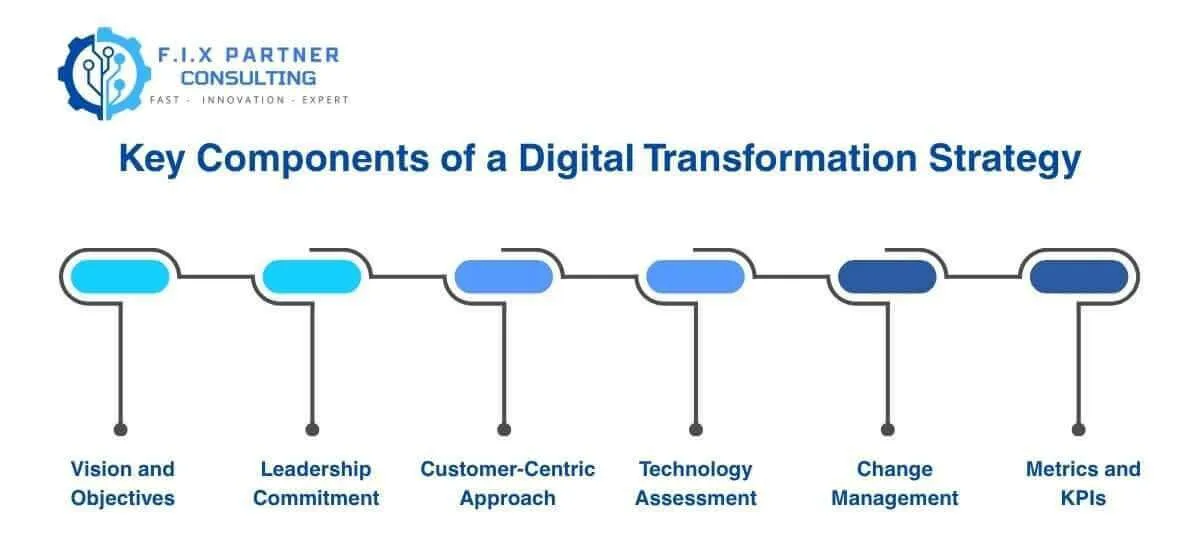
Digital transformation isn’t just about adopting new tools—it’s about reshaping your business to be more agile, customer-focused, and prepared for the future. A strong strategy begins with understanding the essential components that make transformation successful. Below, we break down the key elements, with a focus on how cloud strategy and implementation play a supporting role throughout.
1. Vision and Objectives
Start with clarity. What do you want to achieve with digital transformation? This isn’t only about adopting cloud platforms or automating tasks—it’s about aligning technology with long-term business goals. For example, if your mission is to serve customers faster, your objectives might include streamlining service workflows or offering mobile access. A clear vision helps teams prioritize efforts and ensures cloud solutions directly support your strategic direction.
2. Leadership Commitment
Transformation requires more than just funding—it needs strong leadership. Executives must actively support the shift by communicating the “why” behind it, removing internal barriers, and enabling decision-making at every level. Cloud strategy often challenges traditional IT thinking, so leaders must promote a culture of openness to new models like pay-as-you-go infrastructure or decentralized data access. Without visible leadership commitment, even the best technical plans can stall.
3. Customer-Centric Approach
Put your customers at the heart of your strategy. Transformation should focus on solving their pain points and improving their journey. Cloud platforms make it easier to unify customer data from multiple sources—sales, support, marketing—and turn it into actionable insights. This allows businesses to deliver personalized services, improve response times, and build long-term loyalty in ways that static systems can’t support.
4. Technology Assessment
Before you invest, assess where you are. Which systems are still functional, and which are holding you back? An effective cloud strategy includes reviewing legacy systems, identifying integration needs, and understanding where new technologies can offer the greatest return. Not all tools need to be replaced at once—phased migration or hybrid models can allow smoother transitions with less disruption.
5. Change Management
People drive transformation, not just technology. It’s vital to prepare your team for the shift by communicating why the change is happening, what it means for them, and how they’ll be supported. Cloud-based systems often introduce new workflows, collaboration tools, and automation. A solid change management plan—complete with training, feedback channels, and support resources—ensures smoother adoption and long-term success.
6. Metrics and KPIs
Set clear, measurable goals to track progress. From cloud adoption rates to customer satisfaction scores, metrics help keep your transformation on course and justify further investment.
By aligning cloud strategy with these core components, your business can build a future-ready foundation for growth and innovation.
Steps to Develop a Digital Business Transformation Strategy
Developing a digital transformation strategy may seem complex, especially for non-IT leaders. But with a structured, step-by-step approach—rooted in a solid cloud strategy and implementation plan—any organization can build a path toward greater efficiency and long-term growth.
1. Assess Current State
Begin by analyzing your organization’s existing processes, systems, and digital capabilities. Identify bottlenecks, manual tasks, or disconnected systems that slow down operations. This assessment creates a clear starting point.
2. Identify Opportunities
Look for areas where cloud-based solutions or automation can make a real difference. These could include improving customer experience, streamlining internal workflows, or enabling remote collaboration. Use real business challenges to guide your focus.
3. Set Clear Goals
Define SMART goals—Specific, Measurable, Achievable, Relevant, and Time-bound. These goals should reflect both your operational needs and broader business vision. For example, aim to increase customer retention by 15% in one year using a cloud-based CRM, or reduce invoice processing time by half through automation. Clear goals ensure every decision—technology, budget, training—stays focused and measurable.
4. Select the Right Technologies
Once goals are defined, evaluate digital tools that directly support them. Focus on cloud platforms that are secure, scalable, and easy to integrate with your existing environment. Choose solutions that solve immediate problems but also adapt as your business grows. Don’t chase trends—prioritize tools that deliver long-term value and user-friendly experiences.
5. Engage Stakeholders
Involving people early makes all the difference. Engage leadership to support funding and direction, but also involve employees who will use the new systems daily. Customers and partners can provide insights into what changes they’ll value most. When stakeholders feel heard, they’re more likely to support and adopt the transformation.
6. Develop a Roadmap
A roadmap is your playbook. It outlines what happens, when, and who is responsible. Define phases, key milestones, and timelines. Include internal communication plans, training needs, and contingency strategies. A clear roadmap brings structure to the complexity of transformation and helps maintain momentum throughout the journey.
7. Implement in Phases
Phased implementation helps reduce risk and avoid business disruption. Start with a pilot program or limited rollout. Gather feedback, fix issues, and build confidence before expanding further. This approach allows your teams to adjust gradually and ensures each phase delivers value before the next begins.
8. Monitor and Adjust
Continuously measure progress using KPIs that reflect your original goals. Cloud-based platforms offer dashboards and analytics to help track adoption, performance, and user feedback. Stay flexible—adjust your plan based on what’s working and what’s not. A successful transformation evolves as your business does.
By following these expanded steps, you can lead a transformation that’s strategic, inclusive, and built to last, regardless of your technical background.
Real-World Examples of Digital Business Transformation
Understanding digital transformation is easier when we see how it’s applied in the real world. While the term may sound technical, it simply means using digital tools—often through cloud strategy and implementation—to improve how a business operates, delivers value, and adapts to change. Here are three industry-specific examples that show how different sectors are successfully embracing transformation.
Case Study 1: Retail Sector
A global retailer facing shifting customer behavior invested in an omnichannel strategy. By integrating their online store, mobile app, and physical locations through cloud-based platforms, they created a seamless shopping experience. Customers could browse online, check inventory in real time, and pick up or return items in-store. Cloud strategy played a critical role by enabling flexible, scalable systems that connected customer data and supported personalized marketing, leading to increased sales and loyalty.
Case Study 2: Manufacturing
A leading manufacturer modernized operations by implementing IoT sensors and predictive maintenance tools, all connected via a secure cloud platform. This move allowed real-time monitoring of equipment, reducing unplanned downtime by over 25%. Instead of reacting to failures, the company could anticipate maintenance needs and schedule repairs more efficiently. The cloud made it possible to store, analyze, and act on massive volumes of machine data without the need for expensive on-site infrastructure.
Case Study 3: Healthcare
A regional hospital expanded its services with a cloud-based telemedicine platform. Patients could schedule video consultations, access records, and receive care without visiting the hospital. This initiative improved access, especially for rural populations, and optimized doctor availability. Cloud implementation ensured secure data sharing, HIPAA compliance, and system reliability, essential in delivering safe and timely healthcare.
These real-world examples prove that with the right cloud strategy and implementation, digital transformation is not only achievable—it’s impactful.
Choosing the Right Partner for Digital Transformation

Digital transformation is not just about technology—it’s about aligning people, processes, and platforms to create real business value. While cloud strategy and implementation are central to this journey, navigating the path alone can be challenging, especially for businesses without an internal IT team. That’s where a reliable partner like FIX Partner can make the difference. Here’s what to look for when choosing the right digital transformation partner for your business.
1. Understand Your Industry
No two industries face the same challenges. Whether you operate in retail, logistics, healthcare, education, or finance, FIX Partner takes time to understand your business environment. They bring hands-on experience with clients across sectors, allowing them to recommend digital solutions that work in real-world conditions, not just in theory. Their deep understanding helps avoid generic approaches and instead deliver outcomes that directly support your business goals.
2. Offers Tailored Solutions
Digital transformation is not a template. FIX Partner doesn’t offer one-size-fits-all packages—they design strategies specifically for your business. This means analyzing your current workflows, identifying gaps, and selecting the right cloud platforms to support your operations. Whether you’re migrating to the cloud, automating processes, or improving digital customer service, solutions are always aligned with your unique structure and long-term vision.
3. Focuses on Results
Technology should solve problems, not create complexity. FIX Partner sets clear KPIs from the start, such as reducing costs, improving system performance, or increasing employee productivity. With a strong focus on measurable outcomes, every phase of your cloud strategy and implementation is tied to practical, visible results. Progress is tracked, reviewed, and optimized over time.
4. Provides Ongoing Support
Transformation isn’t a one-time project—it’s an evolving process. FIX Partner offers continuous support long after deployment. This includes regular system updates, user training, cloud performance reviews, and the flexibility to pivot as your needs change. Their team stays engaged to ensure your business evolves with confidence, backed by expert guidance every step of the way.
Choosing a FIX Partner means choosing a long-term ally who understands your business, delivers real results, and walks with you through every phase of digital transformation.
Conclusion
A digital business transformation strategy is vital for companies thriving in a competitive, technology-driven world. By aligning digital initiatives with business goals, organizations can unlock new efficiency, innovation, and growth levels.
Ready to transform your business? Contact us today to craft a strategy that drives your success!

